
Registration and breakfast

 play_arrow


 play_arrow
The maturing US private credit market- ushering in a new era
Globally, the private credit market is set to grow to US$2.8 trillion by 2028. In the US, demand for the asset class shows no signs of stopping, with high interest rates, a slowdown in PE deal activity and tighter bank lending bolstering private credit’s appeal. As the direct lending market matures and more consolidation occurs, it is expected that market will continue to expand into new areas, including asset-backed finance structures, more bespoke deals and opportunistic deal activity. Our group of leading managers will discuss the outlook for the year ahead and what to expect in the evolving landscape of private credit.
- What are the key considerations for private credit managers in a challenging and shifting macroeconomic environment?
- Private credit vs banks: will private credit face renewed competition from banks in light of relaxed banking regulations, or will there be more strategic alliances?
- What are the next growth opportunities and capabilities in private credit as managers diversify and expand their platforms beyond LBOs, such as ABFs and BDCs?
- With the continued rise of mega fund activity, will there be increased market consolidation amongst managers? Can niche lenders find a competitive advantage?


 play_arrow
Networking break


 play_arrow
Opportunistic credit: ready for action
2024 saw increased activity in the opportunistic credit and special situations space, with significant fund closings and fund launches benefiting from high interest rates, as institutional investors look for higher, differentiated returns. It is expected that 2025 will see continued growth in this area as levered borrowers look for refinancing in the higher-rate environment. Our panel of opportunistic credit managers will discuss competitive landscape for the strategy in the next 12 months.
- What factors are propelling the continued growth of opportunistic credit?
- Which sectors and industries are being targeted by opportunistic credit managers?
- How is the opportunistic credit GP landscape evolving, and is it in danger of becoming oversaturated?
- Why are an increasing number of LPs looking beyond direct lending and allocating to opportunistic credit?


 play_arrow
Networking lunch


 play_arrow
Fund formation: customization and diversification
The rapid growth of private credit has meant that GPs and LPs alike have become more sophisticated. Whilst traditional closed-ended structures still remain attractive to institutional investors, managers are increasingly exploring a wider range of structures and customized strategies to provide investors exposure to the asset class, such as through evergreen or hybrid structures. Meanwhile, sources of capital seeking private credit exposure are broadening, with increased inflows from retail and insurance investors. Our panel of GPs and LPs will assess the competitive landscape and discuss the best strategies to employ.
- Where are the best opportunities, and how are GPs dealing with an increasingly competitive landscape?
- What are GPs doing to entice relatively new investor classes in retail, wealth and insurance?
- What is prompting the increased demand for tailored structures and product offerings?
- What is being offered, such as terms, fee discounts and co investments to get LPs through the door?


 play_arrow
Secondaries and the rise of CVs: becoming mainstream
Private credit secondary deal activity has been growing steadily as more asset managers raise capital in the market and LPs search for liquidity options, and it is expected that demand for private credit secondaries will continue to outstrip supply. One such trend has been the emergence of large-scale private credit continuation vehicles in the market in light of volatile public markets, shifting market conditions and the increased need for long-term, stable returns. Our secondaries experts will break down the trends and outlook for this strategy.
- From niche to mainstream: what continues to drive growth in the private credit secondaries market in 2025?
- What are the factors have led to accelerated CV adoption across the private credit market?
- GP-led secondaries and LP-led secondaries: what unique investment opportunities can each of these strategies provide?
- Where do LPs see the best prospects for generating liquidity?


 play_arrow
Networking break
The convergence of restructuring and private credit
In line with the rise of private credit, the number of private credit restructurings are also expected to increase. Whilst most private credit restructurings have been completed out-of-court, such as Pluralsight and Alacrity, the recent Chapter 11 filing of Zips Car Wash is the latest example of a company that has had to hand over control of the business to its private credit lenders. As private credit continues to grow and more market participants join, it is expected that more deals may be on the horizon. Our panel of experts and managers will discuss the future of restructurings in the asset class.
- What is driving the growth of private credit restructurings in the market?
- Out-of-court vs in-court bankruptcy- why are some companies filing for Chapter 11 vs out of court deals to hand the keys to lenders?
- What are some considerations direct lenders need to take into account when preparing for private credit restructurings?
- What is the outlook for 2025 and beyond?


 play_arrow
Investor and lender insights: looking beyond direct lending
Investors and lenders remain committed to private credit and allocations to direct lending are expected to remain strong in 2025. However, they are increasingly choosing to make larger allocations to fewer managers, opting for large, more established firms. They are also becoming more comfortable with private credit, looking beyond the direct lending space into more niche segments of the market, such as asset-based financing, opportunistic credit and secondaries. Our panel of top investors and lenders will discuss issues that are top of mind during their search for meaningful alpha.
- Why does private credit remain an investable opportunity, and how is the changing landscape of private credit impacting investors?
- What is prompting allocations beyond direct lending, and what are some of the most interesting strategies investors and lenders are looking at?
- Does the middle market remain a compelling space for investors and lenders?
- What are some challenges and risks investors and lenders may face when investing in the asset class, given macro-economic and political uncertainties in 2025?


 play_arrow
Networking drinks
Confirm cancellation
An error occurred trying to play the stream. Please reload the page and try again.
CloseSign-up to join the ION Analytics Community to:
- Register for events
- Access market insights
- Download reports

As Managing Director and Head of Private Credit, Jérôme Marquis oversees the analysis of private debt investment opportunities for issuers with an investment-grade risk profile and offering high returns. He leads the Corporate and Infrastructure Credit, Real Estate Finance, Capital Solutions and Private Credit Portfolio Analysis teams.
Mr. Marquis sits on the investment committees of the private credit portfolios. He joined La Caisse in 1999 and has over 20 years of experience in corporate finance. Jérôme has an extensive track record and recognized expertise in corporate finance. He previously held the position of Managing Director, Corporate Credit, and led an international team specialized in public and private debt investments. Between 2003 and 2007, he worked for the Government of Québec in various roles.
He holds a Bachelor’s Degree in Law from Université de Montréal, a Master’s from University of Oxford and a Master’s of Business Administration from HEC Montréal. He is a member of the Barreau du Québec and is a CFA® Charterholder.

Oliver Thym is a Partner on the Credit team at Thoma Bravo. Based in New York, he joined the firm in 2020 to lead the Thoma Bravo Credit platform and oversee the firm’s credit funds and strategic debt investments. Previously, Oliver spent his entire career at Goldman Sachs, where he was a Partner and Head of Private Credit in the Americas for the Merchant Banking Division. Oliver served on various divisional and firmwide committees, including the Merchant Banking Credit and Corporate Investment Committees and Firmwide New Activity and Credit Policy Committees. He earned an MBA from the Stanford Graduate School of Business after receiving a BS in Operations Research and Industrial Engineering and a BA in Economics from Cornell University, where he graduated Phi Beta Kappa.

Teddy Desloge is a Managing Director in Blackstone Credit and Insurance (BXCI) based in Miami and serves as the Chief Financial Officer and Portfolio Manager of Blackstone Private Credit Fund (BCRED) and Blackstone Secured Lending Fund (BXSL). Since joining Blackstone in 2015, Mr. Desloge has been involved with investment management of various direct lending funds and has focused on origination, research, and execution of private and opportunistic credit investments across industries, supporting private credit strategies.
Prior to joining Blackstone, Mr. Desloge focused on origination, research and execution of private credit investments at Gefinor Capital. He started his career in the Leveraged Finance group at Jefferies.
Mr. Desloge graduated from Hobart & William Smith Colleges with a BA in Economics.

Alexander Popov is a Partner, Head of Credit Opportunities at Carlyle. He joined the firm in 2017 to establish Carlyle Credit Opportunities. Since inception in 2017, Carlyle’s Credit Opportunities strategy has deployed nearly $22 billion, leveraging Carlyle’s areas of expertise and market connectivity. Mr. Popov is a member of Carlyle’s Global Credit Investment Committee.
He serves on the Boards of Content Partners, Litmus Music Group, Seattle Reign and the National Women’s Soccer league (NWSL).
Prior to joining Carlyle, Mr. Popov was a Managing Director at HPS Investment Partners from 2008 to 2016. At HPS, he led investment activities in the United States for HPS Mezzanine Funds I & II and was a member of the Investment Committee for HPS Mezzanine Fund III and HPS’ firm-wide Credit Committee. Mr. Popov founded and led the firm’s real estate credit platform and served as a member of the Board and Investment Committee of the joint venture between HPS and The Related Companies. Earlier in his career, Mr. Popov worked at Oaktree Capital Management, American Capital Strategies and Donaldson, Lufkin & Jenrette.
Mr. Popov received his undergraduate degree from Cornell University and his MBA from NYU’s Stern School of Business. He is Member of the Board of Trustees of the Women’s Sports Foundation. He is based in New York.
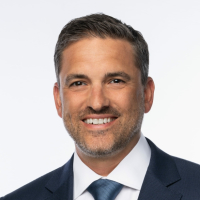
Mr. Stewart is Global Co-Head Corporate Credit and is based in Dallas. He serves on the Leadership Committee and is a member of several investment committees.
Mr. Stewart oversees global public and private corporate credit investing strategies which include private credit, broadly syndicated loans, hybrid capital solutions and opportunistic/distressed credit. Mr. Stewart has 19 years of experience investing in corporate credit. Prior to joining Fortress in 2014, Mr. Stewart was a Managing Director at Levine Leichtman Capital Partners, a middle market private equity and credit investment firm, where Mr. Stewart led origination, execution and portfolio management for the direct lending, distressed debt and hybrid capital strategies. Before that, Mr. Stewart was an analyst at Houlihan Lokey in the financial restructuring group.
Mr. Stewart attended the University of Southern California where he received a B.S. in Business Administration with an emphasis in Finance.

Christina Lee
Managing Director and Co-Portfolio Manager
Ms. Lee is a managing director and co-portfolio manager for Oaktree’s U.S. Private Debt strategy. Her responsibilities include oversight of the team’s investment professionals, portfolio construction and overall management of the strategy. Ms. Lee joined the team in 2009, initially focused on the firm’s Mezzanine strategy. Prior to joining Oaktree, Ms. Lee spent nearly two years in the Leveraged Finance group at Citi. She received a B.S. degree in commerce with concentrations in finance and international business from the University of Virginia.

Jake is the Global Co-Head of Debt Finance. He represents participants in the leveraged finance market on private and syndicated financings (including private credit funds, commercial and investment banks and other non-bank lenders) in a wide range of finance transactions, including domestic and cross-border acquisition finance, investment-grade facilities, asset-based lending facilities, bridge facilities, liability management transactions, DIP financings and restructurings.
A&O Shearman’s Debt Finance team is comprised of over 80 partners globally. We are built to handle our clients’ most complex multijurisdictional matters, with over 45 offices across North America, Europe, Asia Pacific, Africa, Latin America and the Middle East.

Akila Grewal is a Partner and Global Head of Product at Apollo Global Management, where she leads product strategy, thought leadership and client relations across Apollo's global platform. She is a member of the Firm’s Leadership Team. Akila also sits on the Firm’s Credit Management team which helps set strategy for the credit platform and executes on key priorities.
Akila sits on several committees, including the Firm’s Credit Allocations Sub-Committee and the Apollo Opportunity Foundation’s Council. Akila also serves on the not-for-profit Braven’s NYC Board as well as PK AirFinance and Stable Asset Management's Board.
Prior to joining in 2016, Akila was on the Proprietary Trading and Risk Management team at Mariner Investment Group. Previously, she was in the Business Development group at MKP Capital and she started her career at Credit Suisse on the Hedge Fund of Fund’s Portfolio Management team. Akila graduated from New York University's Stern School of Business with a BS in Finance and is a CFA charterholder.
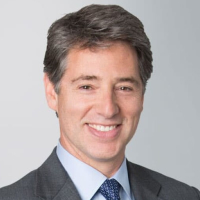
Gary Creem is a Corporate partner with Prosakuer Rose LLP and co-head of The Private Credit Group.
Gary focuses his practice on complex corporate finance transactions, including leveraged sponsor buyouts, acquisition financings and recapitalization transactions. Gary routinely represents an array of leading institutional investors in direct, club and syndicated financing transactions in the middle market and upper middle market, often involving cross-border components. His clients include leading investment banks, institutional investors, direct lenders, private debt funds, business development companies, and technology focused investors. Gary advises these clients on a range of credit products across the capital spectrum, including: senior and senior stretch loans; unitranche facilities (straight and bifurcated); second lien financings; mezzanine debt; subordinated notes; and other innovative financial products. Gary also advises clients on structuring software and other technology-based financings, including recurring revenue-based transactions.
A significant part of Gary’s practice is spent counseling institutional investors in complex inter lender arrangements, including agreements among lenders, intercreditor agreements and subordination agreements. Gary frequently advises clients on debt restructurings and out-of-court workouts, including forbearance matters, debt-for-equity exchanges, restructuring support agreements and Article 9 remedies. Gary has deep experience with non-traditional equity transactions, including debt-like preferred equity as third-party financing, equity kickers and co-investments for private credit investors and debt for equity swaps involving troubled companies.
Gary Creem is a Corporate partner with Prosakuer Rose LLP and co-head of The Private Credit Group.
Gary focuses his practice on complex corporate finance transactions, including leveraged sponsor buyouts, acquisition financings and recapitalization transactions. Gary routinely represents an array of leading institutional investors in direct, club and syndicated financing transactions in the middle market and upper middle market, often involving cross-border components. His clients include leading investment banks, institutional investors, direct lenders, private debt funds, business development companies, and technology focused investors. Gary advises these clients on a range of credit products across the capital spectrum, including: senior and senior stretch loans; unitranche facilities (straight and bifurcated); second lien financings; mezzanine debt; subordinated notes; and other innovative financial products. Gary also advises clients on structuring software and other technology-based financings, including recurring revenue-based transactions.
A significant part of Gary’s practice is spent counseling institutional investors in complex inter lender arrangements, including agreements among lenders, intercreditor agreements and subordination agreements. Gary frequently advises clients on debt restructurings and out-of-court workouts, including forbearance matters, debt-for-equity exchanges, restructuring support agreements and Article 9 remedies. Gary has deep experience with non-traditional equity transactions, including debt-like preferred equity as third-party financing, equity kickers and co-investments for private credit investors and debt for equity swaps involving troubled companies.

Mr. Schafer is a Managing Director at BCP Credit and serves as Chief Investment Officer of Portman Ridge Finance Corporation and Logan Ridge Finance Corporation, both publicly traded BDCs managed by BC Partners. Additionally, he is on the Board of Directors of Portman Ridge. Mr. Schafer joined BCP Credit in May 2018, having previously spent seven years at Apollo Global Management in the Opportunistic Credit group, most recently as a Managing Director in Direct Originations. Prior to Apollo, he spent three years at Deutsche Bank Securities in the Investment Banking Division. Mr. Schafer holds a BBA from the University of Notre Dame.

Jesse Huff is a Managing Director at Blue Owl and member of the Direct Lending Investment Team. In his role, he is Co-Head of Opportunistic Credit and shares portfolio management responsibility for the Blue Owl Opportunistic Lending Fund.
Before joining Blue Owl, Jesse was a Managing Director at Oaktree Capital Management focused on opportunistic direct lending. Prior to that, he was a Principal at the Carlyle Group focused on distressed and special situations. Jesse began his career as an analyst at Merrill Lynch and worked extensively across the special situation’s platform.
Jesse received his MBA from Columbia University and graduated from Ohio University with a BA in Finance.
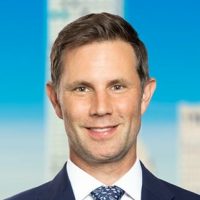
Noah Charney is a Managing Director and Head of Capital Markets on the US Capital Markets team at King Street. He is based in New York and is a member of the US Investment Committee.
Prior to joining King Street in 2013, Noah was an Analyst at Trilogy Capital. Before joining Trilogy Capital, Noah held analyst positions at Och-Ziff Capital Management Group and GoldenTree Asset Management. Noah began his career at Bear Stearns and Credit Suisse First Boston Corporation.
Noah received a B.A. in Economics from Queen’s University and an M.B.A. from Harvard Business School.

Chris Kenny, Managing Director, serves as an investment professional focused on stressed and distressed investments as well as GP solutions financing. Mr. Kenny most recently worked at Diameter Capital Partners as a Senior Analyst focused on the energy, pipeline and power sectors as well as litigations/liquidations. Previously, he worked at Aurelius Capital Management as a Research Analyst, at Goldman Sachs as a Vice President in the Leveraged Finance Group and served as a submarine Junior Officer in the United States Navy. Mr. Kenny holds a B.S. in Electrical Science and Engineering from the Massachusetts Institute of Technology, a J.D. from the University of Virginia School of Law and an M.B.A. from the University of Virginia Darden School of Business, where he won a Shermet Award.

Peter Ma is a Managing Partner and Co-Founder of Square Nine. Mr. Ma will oversee all firm operations with a particular emphasis on the investment strategy, risk management, and process. Ma was most recently a Managing Director at Morgan Stanley, where he served as a member of the executive team for the Private Credit platform of Morgan Stanley Investment Management (MSIM), and a member of the Investment Committee for funds under the Direct Lending, Opportunistic Credit and Senior Loan strategies beginning in 2021. Mr. Ma has over 15 years of relevant industry experience, with a focus on originating and executing credit investment opportunities. Prior to joining Morgan Stanley, Mr. Ma was a Partner and Managing Director at Colbeck Capital, responsible for sourcing special situations credit opportunities, leading investment execution, and portfolio management. Prior to Colbeck, Mr. Ma was an investment banker at MESA Securities where he advised media & entertainment companies on mergers, acquisitions, and capital raising, with a focus on structured solutions. Mr. Ma is a graduate of Harvard University with a Bachelor of Arts in Economics.

H.T. Flanagan is a debt finance partner in the Dallas and New York offices of Kirkland & Ellis LLP. He advises private credit funds, alternative lenders and other investors in traditional private credit financings and bespoke capital solutions. He counsels such credit-oriented investors on direct originations, secondary market opportunities, complex intercreditor issues and novel structured capital investments. In addition to his private credit-focused lender-side practice, H.T. also advises private equity firms and their portfolio companies on a range of borrower-side leveraged finance transactions. He has extensive experience representing both lender and borrower private capital clients on acquisition financings, liability management transactions, debtor-in-possession financings, hybrid capital instruments and special situations investments.
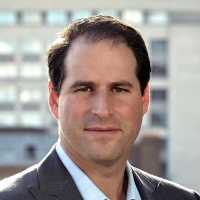
Barrett joined Hayfin in 2016 and is a Managing Director in the Healthcare Team. Prior to joining Hayfin, Barrett spent two years at Bank of America Merrill Lynch in the Leveraged Finance team within the Investment Banking Division, focusing on origination, underwriting and execution of leveraged finance transactions. Barrett graduated from Touro College of Medicine, New York, with a Master of Science in Biomedical Sciences and from Hampden-Sydney College, Virginia, with a Bachelor of Arts in Economics.

| Kimberly Smith is the Chief Capital Formation Officer of Andalusian Credit Partners. She has more than 20 years of experience in capital raising, relationship management, and marketing and communications. In her current role, Kimberly oversees Andalusian’s fundraising and investor relations efforts. She is responsible for developing the firm’s fund formation strategy, executing initiatives to attract capital, and cultivating and managing relationships with institutional and high-net-worth investors globally. Kimberly also spearheads Andalusian’s communications strategy, enhancing the firm’s visibility and brand among investors, borrowers, and other audiences. Previously, Kimberly served as the Chief Capital Formation Officer at Techstars, where she led the strategy and execution of fundraising, deal sourcing, and investor relations activities for the global network of entrepreneurs and mentors. Before joining Techstars, Kimberly was a Partner and Director of Marketing and Investor Relations at Owl Creek Investment Management, where she managed communication and relationships with existing and prospective investors and oversaw the firm’s branding and marketing initiatives. She has also held roles at Davidson Kempner Capital Management and ABN AMRO Bank. Kimberly serves as an Honorary Trustee of the Ethical Culture Fieldston School after completing a five-year term as Chair of the Board. She is also a trustee of the Bridge Golf Foundation and Group for the East End, and serves on the advisory board of MeshEd, an EdTech company based in New York. Kimberly holds an M.B.A. from Fordham University and a B.A. from Middlebury College. |

Jeff Cucunato leads the Multi-Strategy Debt Solutions team within BlackRock’s Private Credit Group. The team designs and manages solutions and portfolios that allocate to opportunities across public and private global credit markets. He also chairs the credit platform’s Investment Strategy Group, which focuses on evaluating investment opportunities across global investment grade, high yield, bank loans and illiquid credit. Previously, Mr. Cucunato was Head of Investment Grade Credit where he lead the firm’s U.S. fundamental investment grade credit effort for over 10 years and spent 15 years as the lead portfolio manager for BlackRock’s investment grade credit and long duration portfolios. He began his investment career in 1997 focusing on interest rate products, including management of BlackRock’s inflation-linked bond portfolios. Mr. Cucunato joined BlackRock in 1995 as an analyst in the Institutional Client Business group, working with international clients and alternative investments. Mr. Cucunato earned a BA degree, cum laude, in history from Dartmouth College in 1995.

Sijia is a partner in Davis Polk’s Investment Management practice. Sijia advises fund sponsors on the formation and operation of investment funds in a variety of strategies and asset classes, including private equity funds, hedge funds, real estate funds, “hybrid” funds and debt funds. She also advises fund managers on fund-related aspects of M&A transactions, including deal structuring and co-investment arrangements.
Sijia represents fund sponsors and investors in connection with a broad range of complex secondary transactions – including continuation vehicle transactions, portfolio sales, tender offers, structured secondaries, synthetic secondaries and fund restructurings across various sectors.
She also advises fund sponsors on internal operations and firm management matters, including governance, compensation, succession planning and separation arrangements, as well as regulatory and compliance matters.
In 2024, Law360 named Sijia a “Rising Star” in fund formation and Secondaries Investor named her among the “Next Gen Leaders of Secondaries.”

Stefan Singer is a Managing Director on the Secondary and Portfolio Finance team focusing on the Portfolio Finance investments. He is based in New York.
Prior to joining Carlyle AlpInvest in 2024, Mr. Singer was most recently Country Head of Singapore at Zagga Investments. Previously, Mr. Singer built and led the Private Markets Financing Solutions business at J.P. Morgan, where he spent 18 years in a variety of capacities across Latin America, North America, and Asia, and was a key player in developing the bank‘s capabilities in NAV-based lending.
Mr. Singer received a BS in Engineering from Cornell University.

Ben is head of Liquidity Solutions with Antares Capital. He oversees the firm’s liquidity-focused strategies, including credit secondaries. Prior to his current role, Ben served as a senior originator at Antares. He began his career at GE in 2001 as part of GE’s Investment Analyst Program, where he conducted due diligence and performed field exams on current and prospective borrowers. He joined GE in 2006 after working on the GE Sponsor Finance Leverage finance team. Ben earned a bachelor's degree in finance from John Carroll University.

Jonathan Leu is an Investment Principal based in Coller Capital’s New York office.
Prior to joining Coller Capital in 2018, Jonathan was a Vice President in the Principal Finance team at Macquarie Group. Previously, he worked as an Associate in Credit at KKR.
Jonathan has a BA in Economics from University of Wisconsin-Madison.

Tod Trabocco, CFA is Head of Private Debt Advisory for StepStone Private Debt (part of StepStone Group), responsible for helping public and private pension plans, insurance companies, endowments and foundations build private credit portfolios through primary fund investments, co-investments and bespoke SMAs and sits on the Private Debt Advisory Investment Committee.

Madalina Iacob is a seasoned financial journalist with more than a decade of experience covering distressed debt, liability management transactions, complex restructurings, and event-driven credit across the high-yield and leveraged finance markets. Her reporting had a particular emphasis on the energy and telecommunications sectors, where she has closely followed in and out-of-court restructurings, covenant erosion, creditor litigation, and evolving private credit dynamics.
She holds a Master’s degree in Business and Economic Reporting from New York University and a Master’s in European Politics & Policy from the University of Manchester in the UK, where she was awarded an Open Society Foundation scholarship.
Prior to her U.S.-based financial journalism career, Madalina worked as a broadcast journalist covering geopolitical developments and policy across global markets. Her international reporting assignments included on-the-ground coverage from Afghanistan, Belgium, Cuba, Italy, Spain, Turkey, and the United Kingdom.

Lauren Krueger, Managing Director, Credit, New York
Lauren Krueger (New York) joined KKR in 2018 and is a Managing Director in the firm’s Credit business, where she leads corporate governance and restructuring efforts. Ms. Krueger is a member of the Global Corporate Private Credit Investment Committee and co-chair of the KKR Private Credit Portfolio Monitoring Committee. She sits on the board of directors of several portfolio companies, including JW Aluminum Inc., PRG Worldwide Entertainment, Constellis, Kellermeyer Building Services and One Call. Ms. Krueger was an independent fiduciary for Drivetrain Advisors, where she worked with investors to maximize value for stressed and distressed companies. Previously, she served in investing roles at Esopus Creek Advisors and the D.E. Shaw Group and in restructuring advisory at Lazard Freres. Ms. Krueger holds a Bachelor of Arts from Princeton University and an MBA from Columbia Business School, where she served as an associate adjunct professor of finance for several years. She currently sits on the board of directors of Her Justice, a nonprofit organization that provides free legal help to women living in poverty in New York City, and the Board of Trustees of Horace Mann School.

John Britton is a partner in the New York office of Milbank and a member of the firm’s Alternative Investments Practice.
Primary Focus & ExperienceMr. Britton’s practice focuses on representing direct lenders in a broad range of private finance transactions, including domestic and cross-border acquisition financings, leveraged recapitalizations and refinancings; second lien and first out-last out structures; holdco and preferred equity financings; and debt restructurings. Mr. Britton also represents lenders and companies in restructuring matters and liability management transactions.

Fran Blair joined PSP Investments in 2018 and serves as a Managing Director in the firm’s direct investing Credit business, where he heads the distressed credit and rescue finance strategy in New York. Mr. Blair is a member of the Global Credit Investment Committee for private credit and liquid/syndicated leveraged credit in addition to leading the firm’s restructuring and post-reorganization corporate governance efforts. He currently sits on the Board of Directors of Transcendia Holdings Inc., Fleet Farm Group LLC, and Coronis Health I, LLC, with past board experience including Crash Champions LLC (formerly Service King), Dayton Superior Corporation, and Penson Technologies LLC (formerly Penson Financial Services). In addition to his corporate governance roles, Mr. Blair has extensive experience serving on creditor and ad hoc committees in restructurings and bankruptcies, including cases such as Indiana Toll Road. Prior to PSP, Mr. Blair was a Managing Director at Solus Alternative Asset Management LP, where he was a founding member of the investment team in 2007. He previously held roles in credit investing, trading, and restructuring at Deutsche Bank and began his career in the Financial Sponsors Group at Bankers Trust. Mr. Blair holds a BA in Economics from Hamilton College.

Mr. Miller serves as Group Managing Director, Chief Investment Officer, Chairman of the Investment Committee of TCW Private Credit and Co-Portfolio Manager of the Specialty Lending, Rescue Finance and TCW Steel City strategies. Mr. Miller joined TCW in 2013 with the acquisition of the Special Situations Funds Group from Regiment Capital Advisors, LP which he led since the group’s inception in 2001. Mr. Miller has over 30 years of experience in the capital markets and previously was ranked on the Institutional Investor “All American High Yield Research Team” for six consecutive years, focusing primarily on the Metals and Mining sector. Prior to his involvement in high yield research, he was at Chase Manhattan Bank in the Mergers & Acquisitions Group. He then moved on to become a Managing Director with the High Yield Group. Subsequently, he became the Head of High Yield Research at BankBoston Securities and in 1999, Mr. Miller joined UBS as a Managing Director and Head of the Global High Yield Research Group. Mr. Miller currently serves as an ex officio Trustee of the University of Rochester Endowment and is a Board Member of the Nativity Preparatory School and a former Board Member of the Dexter Southfield School. Mr. Miller received his BS from Syracuse University and his MBA from the University of Rochester.

Corry Short is a Vice President in Credit Strategy, covering high yield, leveraged loans and private credit. Prior to joining Research in 2022, he worked in Barclays’ Investment Banking Division as a member of the Liability Management team within Debt Capital Markets. Corry graduated from Princeton University with a degree in Economics.
Daniel Garant joined BCI in September 2017. He is responsible for managing a diverse, global portfolio of investments, which combines index and active management strategies in equities, fixed income, derivatives, currencies, credit, and absolute return strategies that integrates environmental, social, and governance factors into investment analysis and decision-making. With $250.4 billion of gross managed assets as of March 31, 2024, BCI is one of Canada’s largest institutional investors within the global capital markets.
Daniel has over 30 years of experience in the investment management industry. Before joining BCI, he was the Executive Vice President and Chief Investment Officer at the Public Sector Pension Investment Board (PSPIB) for two years. Prior to that, he served as their Senior Vice President, Public Markets Investments from 2008–2015. In years previous, Daniel held several business development and portfolio management positions, each with increasing responsibility, at Hydro-Québec. He was their Executive Vice President of Finance and Chief Financial Officer, as well as the Chief Executive Officer of Hydro-Québec International.
Daniel holds a bachelor of arts in finance from Universite Laval Quebec and is a CFA® charterholder. He serves on the QuadReal board of directors and has served as Director on the boards of both public and private companies.

Paras leads the corporate credit business in the Americas which invests directly in non-investment credit across the capital structure. Prior to joining the CPP Investment Board, Paras was a Senior Vice President in the Mezzanine Finance group at Oaktree Capital Management in New York. Prior to that, he worked at UBS Investment Bank in the Leveraged Finance group in New York. Paras holds a MS in Operations Research from Columbia University and a BS in Operations Research & Industrial Engineering from Cornell University.

David Thompson is the Direct Lending group team leader in New York. He is responsible for originating and underwriting middle-market Direct Lending investments in the Northeastern U.S., managing the portfolio, and supporting the firm’s fundraising efforts.
Prior to joining in 2022, David spent six years at Brookfield Asset Management on the Special Investments and Principal Credit teams. Prior to Brookfield, he was with Garrison Investment Group, GSC Group, and Goldman Sachs, bringing over 20 years of industry experience.

Mr. Szwarc leads Manulife Investment Management’s junior credit business, which focuses on providing subordinated and second-lien debt and structured equity solutions to private equity sponsors and their portfolio companies. He joined Hancock Capital Management—now operating as Manulife Investment Management—in 2013. His responsibilities include oversight of the team’s investment professionals, portfolio construction and overall management of the strategy. Mr. Szwarc is also an acting investment committee member for private equity co-investments and primary fund commitments at Manulife Investment Management. Previously, he was Vice President at Pomona Capital, where he focused on private equity secondary and co-investment opportunities. Earlier in his career, Mr. Szwarc held investment positions at AlpInvest Partners and Prudential Capital Group.
Mr. Szwarc received a BS in Finance and Accounting from Boston College and an MBA from Northwestern University’s Kellogg School of Management. He is based in New York.