
Registration & breakfast

 play_arrow

 play_arrow


 play_arrow
Europe’s infrastructure: Re-emerging safe haven or short on opportunities?
Amid escalating global tariff wars, is Europe’s infrastructure market regaining its appeal as a top destination for long-term capital seeking stability? With inflation and interest rates falling across the EU, investment conditions are improving – yet lingering UK volatility and sluggish GDP growth throughout the continent continue to raise concerns. This panel explores how infrastructure investors are weighing these factors, and how this is driving deal flow.
- Are tariff wars repositioning Europe as a safe haven for infrastructure capital, or simply adding fresh uncertainty?
- As interest rates fall, is the European deal environment becoming more favourable – and are asset valuation gaps narrowing?
- Is stable, regulated infrastructure making a comeback as a go-to asset amid threats to global GDP growth?
- Are Europe’s renewed infrastructure plans, including those in the UK and Germany, unlocking new opportunities for private investors?
- Are green industrial policies and digital transition tailwinds still driving infrastructure investment momentum in Europe?


 play_arrow
Networking break
What’s the secret to a successful mid-market strategy?
Global mega fund managers are gobbling up a majority of LP commitments, while mid-market strategies in the main have struggled to hit their fundraise targets. What can mid-market GPs do to turn this around?
- Why are mid markets struggling to meet their fundraise targets?
- How far does sector specialism make a difference when attracting LP capital?
- Are mid-market GPs sufficiently differentiating themselves?
- Can mid-market GPs tap new pockets of capital such as retail, family offices and LPs in geographies such as the Middle East?
- Are GPs balancing LPs’ demand for greater returns and risk management?


 play_arrow
Energy transition in flux: Capturing value amid rising risks
As global enthusiasm for energy transition investment cools, is Europe still delivering credible returns? This panel will examine where capital can be most effectively deployed – from mature renewables to next-gen technologies – and whether current policy frameworks offer enough incentives. It will also assess the invest-ability of Europe’s power grids amid rising demand for transmission and the re-emergence of nuclear in the infrastructure mix.
- Where are the strongest opportunities in European wind and solar – are valuations of operational assets attractive, or is it worth taking development risk for better returns?
- Which emerging transition technologies – storage, hydrogen, bioenergy, carbon capture – present the strongest investment cases today?
- Are Europe’s power grids truly accessible to private investors and do returns match the regulatory risk?
- Is nuclear re-entering the mainstream for infrastructure investors or was Sizewell C a one-off?


 play_arrow
Lunch
What’s next for digital infrastructure? Investing beyond AI hype
Europe’s digital infrastructure remains one of the fastest growing sectors, but investors are starting to question high valuations. The panel examines whether data centre prices have reached a high-water mark and where are the most compelling prospects for fibre deals. The discussion will also consider investor appetite for core assets such as telecom towers and highlight new opportunities beyond traditional digital assets.
- What is the outlook for data centre expansion and are valuations still rising amid AI-driven demand?
- Where are the emerging hotspots for fibre investment, and are there opportunities in challenging countries such as the UK and Germany?
- Is competition for core digital infrastructure becoming more intense as these assets become scarcer? Are investors finding new deals in second-tier European markets?
- Can emerging subsectors like ground leases, chip firms and subsea networks be attractive for infrastructure investors? And where is the next wave of growth?


 play_arrow


 play_arrow
Creative capital: Private credit’s space in infrastructure debt financing
While Europe’s M&A market struggles to regain momentum, the debt financing landscape remains fully open and dynamic. While raising equity is challenging for capital-intensive, high-growth sectors such as fibre and renewables, debt providers are increasingly offering more competitive and innovative financing solutions. This panel brings together investors and lenders to examine the evolving infrastructure debt market – exploring hybrid financing models, sector-specific risk strategies, and emerging sources of capital.
- What competitive financing options are available for refinancing and acquisition, and how is the balance shifting between equity and debt?
- Which financing structures best support greenfield projects and high-growth infrastructure portfolios?
- Is private credit competing with traditional banks or filling unique gaps in infrastructure funding?
- Is demand increasing for subordinated junior debt and structured equity, and what is the growth potential?
- Are senior infrastructure debt funds becoming more attractive as European interest rates begin to decline?
- Can new entrants succeed in the crowded infrastructure debt market, and which strategies effectively differentiate them?


 play_arrow
Networking break
New frontiers in infrastructure: Has value-add peaked?
In recent years, elevated interest rates have driven investors and managers to pursue higher-risk, higher-return strategies – from stretching into riskier assets within core sectors to exploring entirely new sectors. But as rates begin to fall across Europe, are value-add strategies losing momentum, or are they now a permanent feature of the infrastructure landscape? This panel explores whether value-add approaches are delivering sustainable performance – and where the line is now drawn between core and value-add investing.
- Which value-add strategies have delivered strong returns with adequate downside protection?
- Which infrastructure criteria can value-add investors be more flexible on and what remains non-negotiable?
- Which sectors are currently leading the value-add charge — and have some gone too far, especially in social infrastructure?
- Are some value-add investments now edging closer to core as the market evolves?
- How are LPs responding — are they pushing back on broadening infrastructure definitions, or embracing the potential for enhanced returns?


 play_arrow
Transport focus: Opportunities and challenges for Eurostar rivals
High-speed rail is one of the hottest transport investment tickets in Europe. Multiple players have announced plans to launch competing high-speed rail services on the underutilized UK-France corridor. Yet despite growing interest and the apparent market opportunity, few of these initiatives have gained real traction. This panel will explore the economic, technical and regulatory hurdles facing these ventures – and assess whether such projects are truly viable for infrastructure investors.
- What are the major operational risks for new entrants? How do these differ from more conventional rail investments?
- How attractive are potential returns and how does the risk profile compare to more traditional brownfield transport assets?
- Are lenders supportive of these projects? What makes financing such ventures particularly difficult?
- What technical and logistical challenges need to be overcome – such as access to rolling stock and depots?
- From a policy and regulatory standpoint, how accessible is the market? Are barriers to entry insurmountable or underestimated?
- Are there lessons to be learned from previous liberalization attempts in European rail markets – and can they inform new bids for cross-Channel services?


 play_arrow
 play_arrow
Networking drinks
Confirm cancellation
An error occurred trying to play the stream. Please reload the page and try again.
CloseSign-up to join the ION Analytics Community to:
- Register for events
- Access market insights
- Download reports
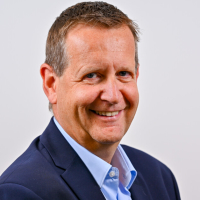
Steve has been involved in financing global infrastructure projects for over 25 years both in the private and public sector. After spending time at NatWest, RBS and Ambac closing infrastructure deals globally, Steve joined HM Treasury and helped establish the Infrastructure Finance Unit before supporting the setup of the Green Investment Bank. The team established the £40 billion UK Guarantees Scheme (UKGS) which issued over £4billion of guarantees and made £1.4billion of fund investments.
During the last 3 years Steve has played a leading role in the set up and launch of the UK Infrastructure Bank, now the National Wealth Fund (NWF), and was one of the first to join, as Co-Head of the Banking Team during the first year of operations.
At the NWF Steve oversees transactions in transport, digital, retrofit, and power grid sectors, and is co-leading at the implementation of the guarantee product suite.
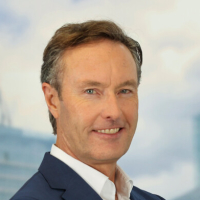
AXA IM Alts, part of BNP Paribas Group, is a €185 billion global leader in Alternatives investing across Real Estate, Alternative Credit, Infrastructure and Natural Capital & Impact. It invests across the capital stack, in private and listed markets, to identify relative value through a 360° view of the markets in which it operates. AXA IM Alts has over €16 billion invested across debt and equity strategies focused on Europe. Mark is a member of the Management Board of AXA IM Alts.
AXA IM Alts’ manages its infrastructure equity strategy through an evergreen format and invests across Core to Core-plus infrastructure with a focus on decarbonisation, electrification and digitalisation underpinned by the conviction that climate change is the issue of this century and the central long-term risk and opportunity for infrastructure investors. 2025 acquisitions include a 1,000 megawatt-hour UK battery (Coalburn 1) and a pan-European solar developer and independent power producer (Ilos).
Mark has over 20 years’ experience as an infrastructure investor and began his career as an engineering geologist and environmental and corporate lawyer.
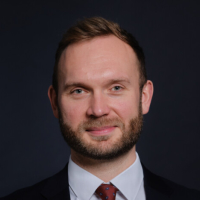
Mr. Marshall is the Head of Research for Infrastructure at DWS. Mr. Marshall’s role is to support the DWS infrastructure platform with thought leadership on the global infrastructure market and the trends which will shape investment opportunities and returns. Mr. Marshall came to DWS after 10 years at Fitch Solutions, where as the Head of Infrastructure & Power Research he was responsible for strategic analysis across the transport and energy sectors, leading the global analytical team to identify opportunities and risks across infrastructure markets. Mr. Marshall is an honours graduate (MSci International Relations) from the University of Nottingham and has previously been based in Hong Kong and South Africa.
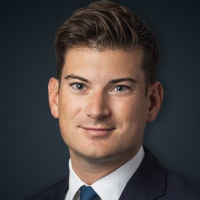
William is Managing Director. William joined Ardian in 2022 from Perella Weinberg Partners (PWP), where he advised clients in the infrastructure & telecom sectors. Prior to PWP, William spent over seven years in the utilities, infrastructure and transport team at Evercore.
William began his investment banking career in the UK M&A team of Goldman Sachs in London.
William is a board member of Verne and Heathrow.
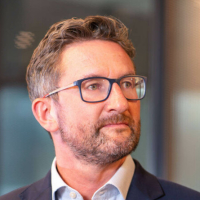
Barry joined Actis in 2016 as Head of Energy Operations.
Prior to Actis he spent eight years with Mainstream Renewable Power as Managing Director of Procurement, Construction and Operations responsible for delivering large scale wind and solar projects in Europe, North America, Latin America and Africa. He was an executive director and Board member at Mainstream and sat on the Boards of two Actis Energy portfolio companies (Lekela Power and Aela Energia) in which Mainstream was a minority partner. Barry was also involved in the development of renewable projects in South Africa (as part of Mainstream) that were acquired by Globeleq Africa at financial closing.
Prior to joining Mainstream, Barry spent eight years with ESB International and was involved in the construction and operation of large-scale thermal power plants. He undertook several roles including Group Safety Manager and Operations Manager for Asia with responsibility for four power plants in Pakistan and Malaysia.
Barry served as a Board member of former Actis Energy portfolio companies Saavi Energia, Echoenergia, Sprng Energy, Ostro, Lekela Power and Aela Energia. He currently serves as a Board member of BTE Renewables, Azura Power, BluPine Energy, Bridgin Power, Rezolv Energy, Levanta Renewables, Valia Energia and Nozomi Energy.
Barry holds a Degree in Mechanical Engineering from Dublin Institute of Technology.
Luke is an accomplished finance executive with over 20 years of experience specialising in M&A, Project Finance, and Asset Management within the European infrastructure sector. He joined John Laing in 2023 as Head of Europe following his position as Head of Infrastructure EMEA at Credit Suisse and before that Director in the Energy and Infrastructure team at BNP Paribas.
A member of the Senior Management Group and Investment Committee at John Laing, Luke drives growth and long-term value through expert leadership in complex transactions across Europe. Luke spearheaded the John Laing transaction with Stegra in 2024 to provide essential water treatment services to the flagship green steel industrial site in Boden, Sweden and has been involved in over €400bn in infrastructure advisory mandates and exits encompassing M&A advisory, strategic advisory, financing, and equity capital markets since 2005.
Anish Butani is Managing Director in the Private Markets team at bfinance and leads the firm’s coverage of the infrastructure asset class. Butani joined bfinance in 2017. He has advised a broad range of clients globally in allocating over $12bn to the infrastructure asset class. Under Butani’s leadership, bfinance was recognised in 2019 and 2020 by Infrastructure Journal as ‘Best Investment Consultancy’ by leading market participants in the asset class.
Alex is based in London and is involved in all aspects of Aberdeen Investments’ Economic Infrastructure business including fundraising & investor relations, origination & execution of investments, asset management and broader strategy. Alex sits on the Operating Committee and Board of Directors, respectively, of the team’s Noordgastransport, Airband, Wessex Internet investments.
He has over a decade of experience in the infrastructure investment space, and prior to joining Aberdeen Investments was a member of RBC’s infrastructure M&A advisory team in London.
Alex has an MSci in Physics from the University of Bristol.
Spence founded Ancala in 2010 with the objective to deliver infrastructure investment differently.
Spence is involved in all aspects of Ancala’s business including overall business management, originating and executing investments, asset management, investor relations, operations and on-going business development and strategy. He sits on Ancala’s management, investment, valuation and risk committees.
He has over 30 years’ experience in the infrastructure industry. Prior to founding Ancala Partners, he was a Senior Managing Director at Macquarie.
In November 2023, Spence was named IJ Investor’s Outstanding Individual in recognition of his significant contribution to the infrastructure investment industry and the successful growth and development of Ancala.
Spence has an MA in Mathematics and Economics from the University of Glasgow.
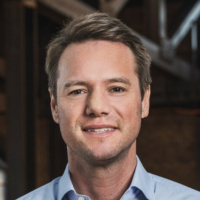
Robert-Jan Bakker, Managing Director, Private Infrastructure, Senior Member of Management
Robert-Jan Bakker is part of the Private Infrastructure business department, based in Zug. He has 19 years of industry experience. Prior to joining Partners Group, he worked at APG Asset Management and Deloitte. He holds a cum laude master’s degree in finance and investments from the Erasmus University Rotterdam, Netherlands. He is also a CAIA charterholder.

Caroline Miller Smith is a partner in White & Case’s Project Development and Finance Group based in London.
She has a longstanding track record in major power and infrastructure transactions, advising on several high-profile energy transition, transmission and distribution, conventional power and renewable energy projects across the world, including in Europe. Caroline undertakes both greenfield and acquisition transactions and complex financings, acting for infrastructure funds, investors, developers, contractors, governments and lenders on project development, finance and acquisition documentation, as well as on “first in country” transactions in numerous industries. Caroline was recently named ‘Project Finance Lawyer of the Year’ at the 2025 EMEA Women in Business Law Awards.
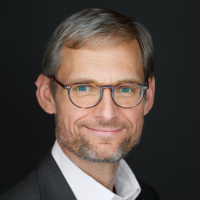
Christophe de Carmoy is Executive Director UK and Ireland at Meridiam.
He joined Meridiam in 2009 as Director of Investor Relations, setting up the function and supporting MIE II (including a dedicated vehicle for EBRD) and MINA II fundraising. In 2012 he joined the development team where he worked primarily on large secondary transactions, German A-Models and airports projects. He led or supported the financial close of transactions such as Eiffage accommodations portfolio, A7 Germany or WEP.
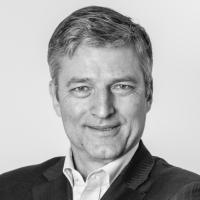
Severin Hiller has over two decades of infrastructure experience having been based in the UK, France and Spain, and the US. Severin joined Qualitas Energy in early 2024 to co-head the launch of a ground-breaking energy transition credit product.
From 2014 to 2023, Severin held the position of partner and co-head of infrastructure debt at Rivage Investment in Paris. His pivotal role contributed to establishing Rivage Investment as the ninth-largest global manager of infrastructure debt funds deploying nearly €5 billion across 128 transactions spanning 14 European countries.
Before his tenure at Rivage, Severin served as an Investment Director at Hadrian’s Wall Capital, focusing on originating and executing junior infrastructure debt transactions. Prior to that, he played a key role in developing the global infrastructure advisory business at Campbell Lutyens. In an earlier role as Vice President at MBIA UK Insurance Ltd, Severin was responsible for originating, executing, and closing numerous infrastructure and asset-backed transactions throughout Europe.
Severin holds a bachelor’s degree in mechanical engineering from Tufts University and an MBA from the London Business School.
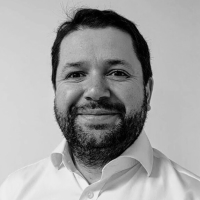
Colin Laing is a Process and Development Engineer with 18 years of experience in the Oil and Gas, Petrochemical and Energy Network sectors in the UK. Recently, he’s been involved in technical reviews for European Governments on projects like the East Coast Cluster (ECC) and Hynet at Ofgem, and the Aramis CCS system with Xodus.
From 2019 to 2024, Colin worked at Ofgem, where he helped develop the Regulated Asset Base Model and Network Code for CCS, was the Technical advisor for the Nuclear investments at Sizewell C in the UK and was the lead engineer for the Gas Transmission system.
At Xodus, Colin is the Advisory team lead for CCS and works with a range of stakeholders in the CCS industry covering the technical and commercial aspects of the burgeoning sector.

Lisa Seifman is a partner at White & Case based in London. Lisa has in depth experience of data center financings on numerous projects around the world, for financial institutions and internationally active developers and operators.
Francisco (“Cisco”) Abularach is global co-head of Infrastructure Investment Banking at JP Morgan (“JPM”). Cisco joined JPM in July 2025 and is based in London. Previously, he was a senior partner and investment committee member at Antin Infrastructure Partners. Before that, Cisco spent 26 years at Citi, where he spearheaded their focus on Infrastructure and acted as financial advisor on a number of the most important transactions across the sector.

Manjari Govada is a Managing Director at DigitalBridge Investment Management. Ms. Govada is based in London and leads the European digital infrastructure investment strategy. In 2018, Ms. Govada relocated from DigitalBridge’s New York office to help open the London office.
Prior to DigitalBridge, Ms. Govada was at BlackRock, in the Alternative Solutions Group focused on direct special situation investments across various alternative asset classes, geographies and sectors.
Ms. Govada received a Bachelor of Arts, summa cum laude, in Mathematics and Economics from the University of Minnesota, Morris and a Master of Finance from the MIT Sloan School of Management.
Based in London, Kevin is a Managing Director of Infrastructure Investments for HOOPP Thames Ltd, the UK subsidiary of Healthcare of Ontario Pension Plan (HOOPP), a Canadian pension with over C$123 billion under management.
Previously Kevin was a Co-Founder and Managing Director of Guardian Smart Infrastructure Management (GSIM), a value-add technology-focused infrastructure fund manager. He also spent 15 years with a large Canadian pension fund, Alberta Investment Management (AIMCo), leading their European infrastructure portfolio and as Head of the London office.
Kevin is a Charterholder of the CFA Institute.
Dominik Thumfart is a Managing Director and Head of Origination, Infrastructure & Energy, on Deutsche Bank´s Global Financing & Credit Trading platform. In this role, Dominik leads origination of structured finance opportunities with institutional investors (particularly the leading infrastructure fund managers globally) and a select number of strategic investors (including renewable project developers, independent power producers, and asset managers and operators of transportation & logistics, telecom, and social infrastructure assets). The Infrastructure & Energy team is a leading participant in the infrastructure debt market and acts as arranger, underwriter and lender in the greenfield and brownfield segments of the market. The team has access to very versatile capital and invests across the the senior and junior debt capital curve.
Prior to joining Deutsche Bank Group in November 2008, Dominik spent fifteen years at Citigroup, predominantly in Frankfurt, London, New York, and Vienna. He was made a Managing Director in 2004 and between 2004 and 2008 was the EMEA Business Head of its Asset Finance Group, Global Markets, based in London.
Dominik holds a Master and a Doctorate in Business Administration from Wirtschaftsuniversität Wien (Vienna University of Economics and Business Administration) and a Master of European Management (CEMS); the latter included a study term at Escuela Superior de Adminstración de Empresas (ESADE) in Barcelona.

Gaétane joined Rivage at the end of 2017 as an investment director. She had spent the 10 previous years as a Director at KPMG within the global infrastructure and Project group where she provided advisory to construction firms and infrastructure funds for their financial closings. The projects analyzed were PPPs and concessions in France and Africa.
Gaétane started her career in 2000 as an infrastructure specialist at French Ministry of Public Works and Transportation before joining the World Bank in 2003 where she advised the governments of Hungary, Russia and Georgia on infrastructure projects and developed financial models to assess the credit worthiness of infrastructure projects in various countries of Eastern Europe and Asia.
Gaétane holds a Masters in corporate finance from Conservatoire National des Arts et Métiers, a Masters in Management from New York University and a Masters in Civil and Transport Engineering from ENTPE Lyon.
Daniel Fuchs, Managing Director and Credit Partner, is the Head of BlackRock’s high-yield Global Infrastructure Debt (GID) fund series. He also serves as GID’s Lead Portfolio Manager.
Daniel is responsible for the development and execution of the high yield infrastructure debt strategy, including fundraising, portfolio management as well as the origination, structuring and underwriting of private infrastructure and energy transactions.
Before joining BlackRock, Daniel was a senior director at Deutsche Bank’s Structured Finance platform in New York, London and Frankfurt where he was instrumental in establishing and building-out the lender’s American Infrastructure and Energy business from its inception in 2009.
Over the course of his career, Daniel successfully originated, executed and closed over 100 infrastructure and energy transactions across developed and emerging markets, covering a multitude of sectors, including energy, power, renewables, social infrastructure, telecommunication and transportation.
Daniel holds a PhD in Finance from University of Bonn (Germany) and HEC, Paris (France).

Vijay Peruri serves as the European Head of Capital Markets at Brookfield Renewable Power & Transition Group, where he oversees all financing and risk management activities across the firm’s European portfolio companies and acquisition opportunities. With a focus on delivering innovative capital solutions that support Brookfield’s energy transition strategy, Vijay plays a key role in structuring and executing complex transactions across the region.
Prior to joining Brookfield in 2021, Vijay was part of the Energy Financing team at Siemens Bank, working across London and Singapore. His work spanned Europe and Asia, where he specialized in structuring debt solutions for energy infrastructure projects.
Vijay brings over 15 years of experience in energy finance, with a deep understanding of capital markets and a strong track record in supporting sustainable investment strategies.
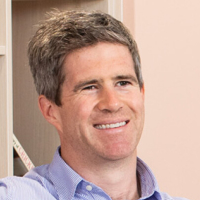
After graduating from the Ivey School of Business at the University of Western Ontario, Andrew moved back to Europe and joined Credit Suisse First Boston in London. He subsequently moved into investing with GSO (now Blackstone Credit) via BNP Paribas. Prior to joining MML, he most recently spent more than a decade at Macquarie in London and San Francisco, eventually leading the Capital Solutions business and sitting on the US Management Committee.
Andrew is the Managing Partner of MML Keystone, which invests in essential, asset-backed mid-market businesses with distributed infrastructure characteristics and privileged growth backed by secular tailwinds. The team applies private equity value creation methods to deliver superior risk-adjusted returns.

Giacomo is Co-Founding Partner at Vesper Infrastructure Partners - focused on mid-market value-add European Infrastructure opportunities. Giacomo has almost 20 years of extensive energy, infrastructure and industrials experience as an investor, operator, adviser and board member.
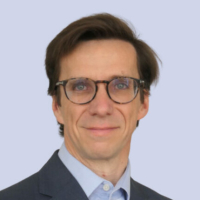
Christophe Bonnat joined Marguerite in 2019. He has 18 years of experience in the infrastructure sector, both in construction and investment. Before joining Marguerite in 2019, he was Investment Director at SEIEF, an EIB sponsored infrastructure fund focused on greenfield PPP and renewable energy projects in Western Europe, where he was responsible for a diverse range of investments, such as PPPs, road and rail projects and solar plants. He was also previously a Bid Manager at Alstom Transport then Bouygues Travaux Publics, in charge of large international urban and suburban rail and road infrastructures contracts during tender stage.
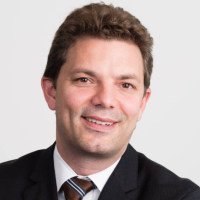
- Co-founder, Reinova Partners – a newly established specialist energy transition infrastructure investment firm focused in Europe and North America
- Ralf has been investing in energy transition for over 20 years and has held a number of roles at Brookfield including Chief Investment Officer, Power & Utilities; CEO of Brookfield Renewable Europe and recently Managing Partner, Head of Private Equity Strategy where he led energy-transition related business transformations
- Prior thereto led build-out of Broofkield’s US renewable power business and roles at Scotia Capital and Ontario Power Generation
- Engineering degree from University of Waterloo and Lunds Tekniska Hogskola and CFA Charterholder
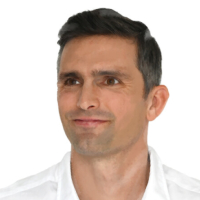
- 5+ years in international consulting, most recently as a strategy consultant to ASEAN in Cambodia, and the United Nations in Iraq.
- Participated in large-scale procurement projects on behalf of the United Nations and New Zealand Ministry of Defence.
- Managed multi-million-dollar commercial real-estate portfolio including sales and purchase, quantitative analysis, leasing and contract management.
- 10 years as an Army Engineer Officer, specialising in project management, strategy development and in-depth planning.
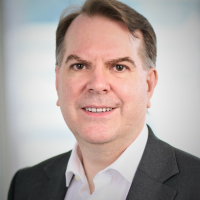
Toby heads the Project and Rail Finance Private Debt Distribution EMEA team and is based in London. His team of 11 covers both syndicate and sales for Infrastructure, Power & Renewables, Resources & Industry, Rail plus sales of Digital Infrastructure Assets.
He began his career with Crédit Agricole CIB London in 2005 in Loan Syndications, initially focusing on Infrastructure Finance distribution and subsequently extended to include Structured Commodity finance distribution. In 2010, Toby’s remit also covered distribution for Rail Finance and Toby worked subsequently on the genesis of the EUR PP market. In 2015-2022, he was appointed Head of Infrastructure, Digital Infrastructure and Rail Finance – EMEA Syndicate and Private Debt Distribution and in 2022, he was appointed Head of Telecom Finance Syndicate within CLF Distribution.
Prior to joining the Bank, Toby worked for WestLB in London, specialising in Infrastructure finance sales.
Toby holds an MBA from the University of Cambridge and a MEng (Hons) from the University of Oxford.
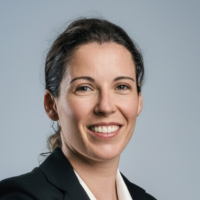
Catherine Pihan-Le Bars is the Deputy CEO, Operations at LE TRAIN, a pioneering company creating a new open-access operator and revolutionizing inter-regional high-speed rail services in France. Catherine oversees operations, strategic development and financing, ensuring the successful execution of this ambitious project, along with key strategic partnerships.
Before joining LE TRAIN, Catherine led major transformation projects in the urban planning and health sectors, including large-scale digital initiatives. Her experience in these areas has prepared her to manage the complex challenges involved in delivering innovative infrastructure solutions. Catherine is particularly focused on how LE TRAIN can contribute to the evolution of mobility in France, with a strong emphasis on operational agility, sustainability and customer experience.
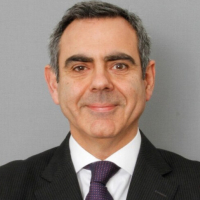
Nuno Ribeiro is a Partner at VTM Global, a European consultancy focused on transport and infrastructure planning, mobility, and transaction advisory. VTM operates from its Lisbon, Madrid and Milan offices.
Nuno brings 30+ years advising sponsors, investors, public authorities, and lenders on new investments, transactions, operations and disputes across airports, toll roads, car parks, light and heavy rail, metros, BRT, urban public transport, ports, and logistics.
His work spans Europe, the Americas, and Africa, with a strong track record in demand and revenue studies that underpin bankable decisions in complex mobility systems. In the past decade he has recently been involved in some of the most relevant mobility infrastructure M&A operations in Europe and is currently advising on 3 of the largest greenfield transport infrastructure projects in the US.
Educated in Civil Engineering at IST, with an MSc in Transport from Imperial College London and complemented with executive training in Harvard and Cambridge, he blends deep technical rigor with executive-level impact.
Nuno is known for translating complex starting points, datasets and systems into actionable strategies for investors, developers, operators and policymakers — aimed at building resilient, high-performance, and sustainable transport outcomes.