
Registration
 play_arrow

 play_arrow
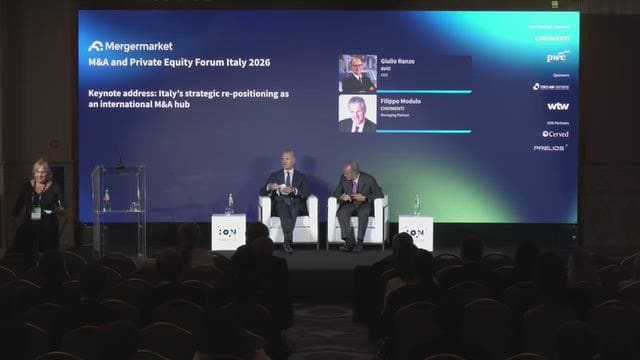
Italy is emerging as a premier European M&A hub in 2026. Backed by a stable political environment and upgraded credit ratings, the market is successfully shifting from mega-deals to dynamic mid-market activity. Deal volumes are accelerating across banking, life sciences, energy infrastructure, and industrial resilience. Furthermore, narrow valuation gaps and clearer tariff-related pricing are setting the stage for a cross-border resurgence, though geopolitical wildcards could still delay execution. Ultimately, Italy’s unique mix of resilient family-owned businesses and robust banking assets continues to offer a compelling blend of tradition, innovation, new sophistication and long-term strategic opportunity.


 play_arrow
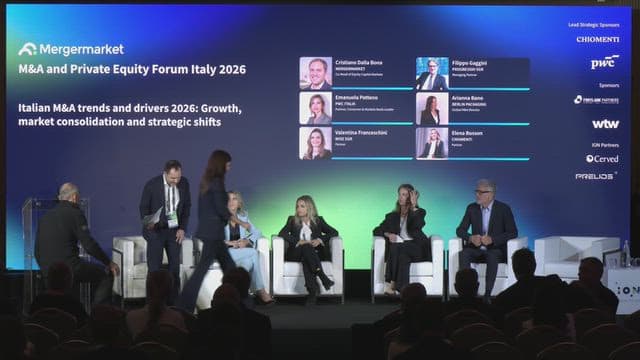
The outlook for Italian M&A in 2026 remains cautiously optimistic. Assuming interest rates stabilise and tariff escalation is avoided, the market is expected to maintain its focus on domestic consolidation, particularly in financial services and regulated energy sectors. This panel will address how Italy's M&A market in 2026 is shifting from 2025's mega-deals toward a higher volume of mid-market transactions, with domestic M&A reaching nearly €33 billion, driven largely by consolidation within the banking sector, private equity add-ons, distressed assets and carve-outs and industrial combinations among Italian firms. A rebalancing from mega-deals to higher deal volume is expected in 2026, driven by Italy's deep industrial base - including automotive, aerospace and defence, healthcare & medical, and consumer sectors - alongside growing interest from international companies and financial sponsors.
- Domestic consolidation vs internationalisation: As cross-border activity returns, how should firms balance domestic consolidation with international expansion, and which strategies are proving most effective in delivering returns?
- To what extent are rising restructuring activity and SME bankruptcies creating actionable opportunities in distressed M&A?
- Value maximisation: Accelerating corporate carve-outs, take-private transactions, and non-core divestments (particularly across the retail and food sectors), and what is the current state of IPO in Italy?
- How are new deals being structured to ensure good outcomes for GPs, LPs, portfolio companies and lenders? Are earn-outs and deferred pricing mechanisms becoming more widely adopted, and how effective are they in ensuring alignment and business continuity?






 play_arrow
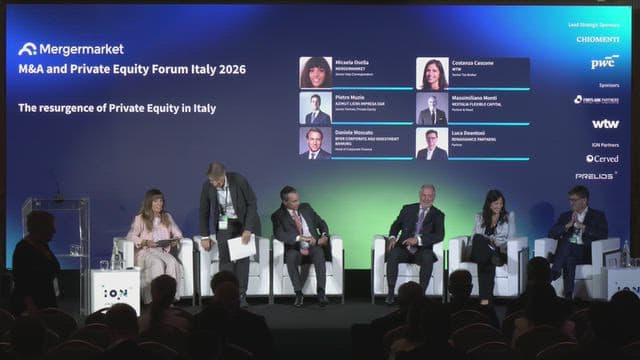
Private equity funds continue to play a central role in the Italian M&A landscape, with 51% of deals being PE-backed throughout the year. Financial sponsors have been instrumental in sustaining aggregate values, particularly through large mid-market transactions and selected mega-deals. In 2026, sponsors are expected to maintain a focus on platform roll-ups and domestic consolidation strategies, where due diligence is more efficient and exposure to tariff and currency risks is reduced. This panel will examine how private equity is shaping dealmaking dynamics and will remain a key driver of market activity going forward.
- How are private equity firms adapting their fundraising and deployment strategies to remain proactive in capturing opportunities, particularly in private transactions and platform add-ons?
- How are tools such as tax insurance being used to accelerate transactions and provide greater deal certainty?
- Is due diligence becoming more rigorous in response to heightened scrutiny around AI governance, data privacy, and supply chain resilience, and how is this shaping execution timelines?
- Are secondary buyouts expected to remain the primary exit route? And is the appeal of GP-led continuation funds and trade sales continuing to grow in the uncertain tax climate?
- Are trade policy shifts, increasing regulatory scrutiny including FDI and ESG requirements and ongoing financing challenges influencing valuations and deal structures?






Networking coffee
 play_arrow
The 2026 Italian infrastructure private equity market is thriving, fuelled by public-private investments, add-on acquisitions, data centre expansion, and the energy transition. While the market remains anchored by National Recovery and Resilience Plan (PNRR) targets and major mobility megaprojects, the fast-approaching European funding deadlines are shifting the focus toward completing current sites, unlocking private capital, and modernising national transport. Our panel of experts will analyse how the market is pivoting, with the government aggressively leveraging public-private partnerships (PPPs) and blended financing schemes. Programmes like InvestEU are being mobilised to trigger over €45 billion in private capital across the energy, telecom, and transit sectors.
- Navigating the post-PNRR market: Streamlining procurement and cutting red tape to accelerate project approvals and execution
- Energy transition focus: Significant investments in renewable hubs, hydrogen-ready infrastructure and EV charging networks to reduce the country’s reliance on volatile energy costs
- Positioning Italy as a strategic Mediterranean digital corridor driven by AI demand and hyperscale cloud deployments
- Driving growth: How international allocators, Italian family offices, and local pension funds are actively investing in local digital and green platforms





 play_arrow
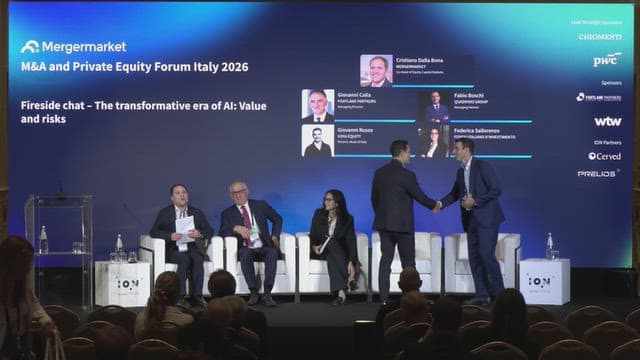
AI is becoming a central driver of transformation in M&A, fundamentally reshaping how deals are sourced, executed and valued. Its adoption is increasingly seen as a key engine of operational value creation across portfolio companies. However, as AI models become more commoditised, questions are emerging around where defensible value will concentrate, whether in data, infrastructure, or organisational capability, and how this will influence transaction dynamics. As AI disruption accelerates, uncertainty around value creation, risk management and long-term strategy is intensifying. This discussion will explore how investors and corporates can navigate these shifts while identifying where sustainable value will emerge.
- Is the integration of AI into M&A dealmaking a structural change? How is it already reshaping how transactions are sourced, executed and completed?
- How can corporates and sponsors use AI responsibly while ensuring value comes from organisational readiness rather than technology alone?
- Which sectors will scale AI fastest, and how will that adoption gap fuel capability driven M&A and consolidation?
- How are investors separating AI hype from durable demand, and how are they stress testing AI-related assumptions in dealmaking?
- Are businesses that have successfully integrated AI into their operations becoming more attractive acquisition targets, and how are due diligence, regulatory compliance and data privacy considerations evolving as a result?




 play_arrow
Hybrid capital is increasing is importance in the market. It can be both an alternative to typical private equity or an instrument to make capital structure of companies more efficient. Private Credit market is also experiencing a strong resurgence in the M&A market in 2026, driven by a combination of high refinancing needs, improved market conditions, and a retreat by traditional banks from the mid-market segment. The panel will observe how, as of early 2026, Italian private debt is showing increased activity after a fluctuating couple of years, with lenders providing bespoke, flexible solutions for capital or financing and owner-operated companies.
- What funding options are currently available for growth and acquisitions, and what advantages do alternative lenders offer compared to traditional banks and private equity?
- How can businesses effectively leverage private credit funds, and which types of transactions are better suited to hybrid capital?
- Are banks and private credit funds increasingly collaborating to deliver hybrid financing structures, combining traditional senior debt with flexible unitranche or junior capital solutions?
- What opportunities exist for sponsor-less lending in the mid-cap segment?





 play_arrow
Lunch
Confirm cancellation
An error occurred trying to play the stream. Please reload the page and try again.
CloseSign-up to join the ION Analytics Community to:
- Register for events
- Access market insights
- Download reports