

 play_arrow


 play_arrow


 play_arrow


 play_arrow


26
Jun
Day 2


-
Agenda09.00 - 09.45JST09.45 - 10.30JST10.30 - 10.55JST
Networking break
11.40 - 12.25JST12.25 - 13.20JST13.20 - 14.20JSTLunch and Close of Conference
Sponsored by
-
SpeakersTim Burroughs Managing Editor Global Private Funds, and Managing Editor, AVCJ Mergermarket
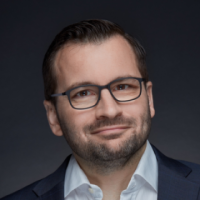 Sueann Yeo Head of APAC Private Wealth EQT Partners
 Junji Yokokura Managing Director / Head of Private Equity Financial Sponsor Coverage KPMG FAS
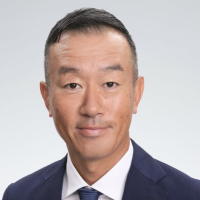 Toby Rodes Co-Founder Kaname Capital
 Shimpei Kanzaki Managing Director, Head of Japan Global Wealth Apollo Management Japan Limited
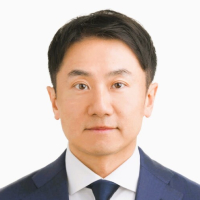 Saurabh Chatterjee Managing Director ChrysCapital
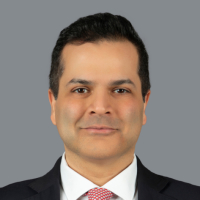 Jim Verbeeten Partner Bain & Company
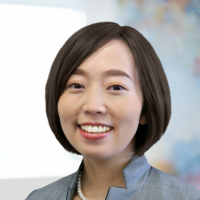
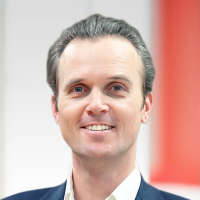 Azusa Owa Partner Bain & Company
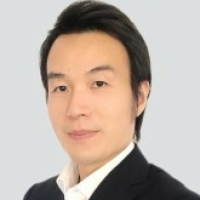
 Pongpat Tantivashinchai Partner Navis Capital Partners
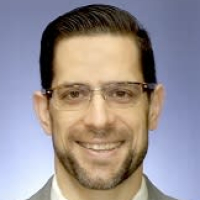
 Paul Ford Partner, Deal Advisory, Head of Private Equity KPMG FAS Co., Ltd
 Nicholas Smith Japan Strategist CLSA
 Samon Suwannarat Co-Founder / Managing Partner 10 Bridge Capital
 Vincent Ng Managing Director and Co-Head of Asia Partners Group
 Ray Yamaguchi Managing Director L Catterton
 Shohei Akiyama Partner, Managing Director, Head of NVP and Business Support Team, Management Committee Member NSSK
 Makiko Hayase Partner Integral
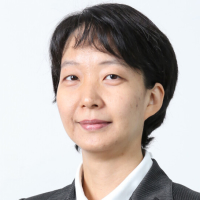 Tatsuya Kubo Managing Director HarbourVest Partners (Japan) Limited
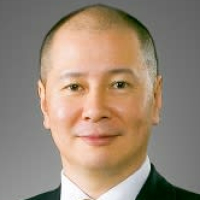 Jesper Koll Senior Adviser Monex Group - Japan Catalyst Fund
 Vincent Churk Principal, Morgan Stanley Private Equity Solutions Morgan Stanley Investment Management
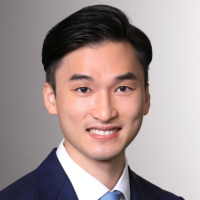 Maki Mitsui Managing Director – Partner Carlyle Japan Equity Management LLC
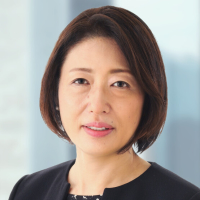 Yasunori Maeda Managing Director Sunrise Capital
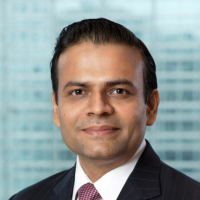
 Nikhil Srivastava Partner and Co-Head of Private Equity PAG
 Brian Heywood Founding Partner and CEO Taiyo Pacific Partners
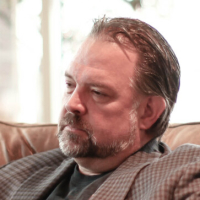 James Smith Founder & CIO Palliser Capital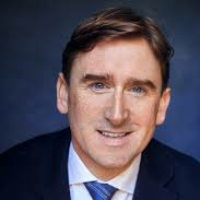

Loading feed
Lead Sponsors




Asia Series Sponsor

Co-Sponsors






















Cocktail Sponsor
Confirm cancellation
Something went wrong.
An error occurred trying to play the stream. Please reload the page and try again.
CloseSign-up to join the ION Analytics Community to:
- Register for events
- Access market insights
- Download reports
Azusa Owa is an expert in Private Equity and Financial Investor practice. She has extensive consulting experience across a range of industries and business topics in Japan, the United States and Australia, focusing on supporting private equity clients on commercial due diligence assignments and post-acquisition value creation in a variety of industries in. Azusa graduated with a master's degree in international education policy from Harvard University and a bachelor's degree in education from International Christian University. She earned her MBA from the Wharton School of the University of Pennsylvania, double majoring to earn a master of international studies (in Mandarin Chinese) from the university's Lauder Institute.
Jim Verbeeten leads Bain & Company’s Private Equity and Financial Investor practice in Tokyo. He has more than 20 years of management consulting experience. Jim advises private equity clients on commercial due diligence assignments in a variety of industries and has supported clients with fund strategy and performance improvement of their portfolio companies. Jim also leads the development of Bain’s annual Japan Private Equity report. He first joined Bain's Amsterdam office in 1999 and has worked in Europe, North America and Asia. He has been based out of the Tokyo office since 2007.
Vincent Churk is a Vice President with the Morgan Stanley Private Equity Solutions team. Prior to joining the firm in 2021, Vincent worked in the Investment Banking Division at J.P. Morgan, where he advised companies on mergers and acquisitions and capital raising activities. Vincent graduated with a B.B.A. in finance from The Hong Kong University of Science and Technology.
Nikhil Srivastava is a Partner and Co-Head of Private Equity at PAG, responsible for supervising the operations and management of PAG’s Private Equity strategy. He is a member of the firm’s Management Committee.
Nikhil joined PAG in 2019 after working across India, Singapore, and the United States markets with KKR for nearly a decade. Prior to that, he worked at Goldman Sachs and Inphi Corporation (NYSE: IPHI). Nikhil holds an MBA from Harvard Business School, a master’s in electrical engineering from Stanford, and a bachelor’s in electrical and electronics engineering from BITS Pilani. Nikhil is also the author of several patents.
Shohei Akiyama is Partner, a member of NSSK’s five-person Management Committee and is Head of NVP (NSSK Value-Up Program) and Business Support Team at NSSK. Shohei is responsible for value creation initiatives of NSSK’s portfolio companies and all the operation functions in NSSK’s Business Support Team (including accounting, tax, legal and compliance functions). Prior to assuming his current role, Shohei was a Director on the Investment Team and has been with NSSK since its founding. Before joining NSSK, Shohei was at JPMorgan Securities Japan Co., Ltd. in their Investment Banking Division. At J.P. Morgan, he was responsible for a number of major transactions for Japanese companies including cross-border M&A and global IPOs. He is a graduate of the University of Tokyo (B.A.).
Ray is a Managing Director at L Catterton who is based in Tokyo, where he leads deal sourcing and execution activities in Japan for the firm’s Asia fund. He has extensive investment and portfolio management experience, and is currently an external director of several portfolio companies.
Before joining L Catterton, Ray was a Director at Sunrise Capital, a Japan-focused mid-cap fund under CLSA Capital Partners, where he spent over 10 years conducting leveraged buyout deals in the consumer lifestyle and e-commerce space. Prior to that, he was with Citigroup Global Markets’ Merger & Acquisition Group.
Ray graduated with a Bachelor of Science from Warwick University.
Tatsuya Kubo joined the Firm in 2010 as a managing director. He focuses on enhancing and building relationships with institutional investors and general partners in Japan. Mr. Kubo joined the Firm from Fortress Investment Group Japan, where he served as Managing Director and Head of Business Development after launching the Japan-based business. Prior to that, he spent over 20 years as a senior manager at Norinchukin Bank, one of the largest financial institutions in Japan, where he built and managed an alternative investment portfolio. He received a BA in Economics from Waseda University in 1988 and an MBA from Duke University in 1994. Mr. Kubo speaks fluent Japanese and English.
Maki Mitsui is a Managing Director and Partner responsible for overseeing Investor Relations in Japan.
Ms. Mitsui joined Carlyle in 2002 and leads the Investor Relations team in Japan, which is responsible for introducing a broad range of products, including private equity, infrastructure, real estate, private credit, and aviation finance. She also serves as the Japan Representative of Carlyle Japan Equity Management LLC.
With over 25 years of experience in private assets, Ms. Mitsui previously established the alternative assets placement business within the Investment Banking division at Merrill Lynch Japan Securities, which she joined in 1997. In this role, she introduced leading global managers to Japanese institutional investors. Prior to that, she worked in international equity sales at CS First Boston, based in both the Tokyo and New York offices.
Ms. Mitsui is a Director of the Japan Private Equity Association and a Chair of its ESG Committee. She also serves as an Advisor to the Social Innovation Partners.
Ms. Mitsui received a B.A. in Political Science from Keio University.
Sueann Yeo is a Managing Director and Head of Asia-Pacific Private Wealth Client Relations and Capital Raising, based in Singapore. Prior to joining EQT, Sueann was an Executive Director and Head of Alternative Investments (Southeast Asia) at J.P. Morgan Private Bank. Sueann received a BBM with a major in Finance from Singapore Management University. She is also a Chartered Alternative Investment Analyst (CAIA) charter holder.
Brian is a founding partner and the CEO of Taiyo Pacific Partners, a friendly activist investment fund focused on Japanese Public companies. Over the past 20 years, he has been an advisor and strategist to the CEO’s of well over a hundred portfolio companies invested in by the fund. He speaks Japanese fluently and has a deep working knowledge of the culture and business practices of Japan. In 2014, he led a friendly management buyout of the electronic music instrument company Roland as Taiyo expanded its efforts into private equity. He believes that a critical mission for any private equity investment is to ensure the underlying company and employees are better off after the MBO than they were before. That means making the company more competitive, ensuring it has a strong management structure and balance sheet , and improving the incentives and compensation to properly reward the hard-working and dedicated employees.
Due to his work at Roland, he was asked to join the board of several other publicly traded Japanese companies. Sitting in the board room gives him a unique insight into the structure and function of corporate Japan, an ability to influence decisions, and a bird’s eye view of the opportunities and challenges that exist in one of the most fascinating markets in the world.
Toby Rodes co-founded Kaname Capital in 2018 to bring deep fundamental analysis and engaged ownership to Japanese small caps, a deep pool of operationally capable companies with strong product focus that too frequently suffer a material valuation discount because of substandard governance practices. Passive and conflicted ""allegiant"" shareholders have simply refused to hold boards accountable across the market cap spectrum for delivering on their potential ROE, a core reason for Japan's multi decade economic malaise. Kaname aspires to be a thoughtful, involved, and long-term ""principal"" owner of quality businesses with substantial valuation rerating potential. Prior to co-founding Kaname, Toby spent 12 years at Boston based institutional manager GMO in the Fundamental Active Team, where he managed roughly $4bn in both large and small cap equities in Japan. His greatest professional interest has always been in the small cap discipline where his Japanese language skills and ability to create relationships with management teams led to an informational advantage. His professional career started in the “Think Tank” trenches of Washington DC before moving to Japan from 1993 to 2004, first as a Rotary Japan Ambassadorial Scholar and later for graduate work at Keio University, Tokyo. His investment career started in equity research at Dresdner Kleinwort Benson and Nikko Salomon Smith Barney in Tokyo where he led some high-profile IPOs but determined his calling was the buyside. After ten years of living in Japan, he attended the Harvard Kennedy School in 2003 which served as an intellectual bridge to GMO. He is presently spending half the year in Japan as well as serving on the Japan Society of Boston’s Board of Directors.
Prior to founding Palliser Capital in 2021, James was the head of Elliott’s Hong Kong office. James joined Elliott UK as an Analyst in 2001 where he focused on European investments before moving to Hong Kong and advancing to the roles of Portfolio Manager and Head of Office. Prior to joining Elliott, James gained a variety of experience at financial and start-up firms. He holds a BA (Hons) and MA in Natural Sciences from Cambridge University.
Tim Burroughs is managing editor of Asian Venture Capital Journal, having joined the publication in May 2011. He is responsible for all editorial content put out under the AVCJ brand, including Asian Venture Capital Journal, AVCJtv, AVCJ Awards and AVCJ.com. Tim previously spent five years at China Economic Review, serving as editor-in-chief and then editorial director. Located in Greater China since 2003, during which time he has lived in Beijing, Qingdao and Hong Kong, Tim has been a China-based contributor for publications including The Sunday Times, Sunday Telegraph, BBC and China Daily. Prior to moving to China, he trained and worked as a journalist in the UK. He was honored at the Society of Publishers in Asia awards in 2007, 2008 and 2010, and at the State Street Institutional Press Awards - Asia in 2012.
Sueann Yeo is a Managing Director and Head of Asia-Pacific Private Wealth Client Relations and Capital Raising, based in Singapore. Prior to joining EQT, Sueann was an Executive Director and Head of Alternative Investments (Southeast Asia) at J.P. Morgan Private Bank. Sueann received a BBM with a major in Finance from Singapore Management University. She is also a Chartered Alternative Investment Analyst (CAIA) charter holder.
Toby Rodes co-founded Kaname Capital in 2018 to bring deep fundamental analysis and engaged ownership to Japanese small caps, a deep pool of operationally capable companies with strong product focus that too frequently suffer a material valuation discount because of substandard governance practices. Passive and conflicted ""allegiant"" shareholders have simply refused to hold boards accountable across the market cap spectrum for delivering on their potential ROE, a core reason for Japan's multi decade economic malaise. Kaname aspires to be a thoughtful, involved, and long-term ""principal"" owner of quality businesses with substantial valuation rerating potential. Prior to co-founding Kaname, Toby spent 12 years at Boston based institutional manager GMO in the Fundamental Active Team, where he managed roughly $4bn in both large and small cap equities in Japan. His greatest professional interest has always been in the small cap discipline where his Japanese language skills and ability to create relationships with management teams led to an informational advantage. His professional career started in the “Think Tank” trenches of Washington DC before moving to Japan from 1993 to 2004, first as a Rotary Japan Ambassadorial Scholar and later for graduate work at Keio University, Tokyo. His investment career started in equity research at Dresdner Kleinwort Benson and Nikko Salomon Smith Barney in Tokyo where he led some high-profile IPOs but determined his calling was the buyside. After ten years of living in Japan, he attended the Harvard Kennedy School in 2003 which served as an intellectual bridge to GMO. He is presently spending half the year in Japan as well as serving on the Japan Society of Boston’s Board of Directors.
Jim Verbeeten leads Bain & Company’s Private Equity and Financial Investor practice in Tokyo. He has more than 20 years of management consulting experience. Jim advises private equity clients on commercial due diligence assignments in a variety of industries and has supported clients with fund strategy and performance improvement of their portfolio companies. Jim also leads the development of Bain’s annual Japan Private Equity report. He first joined Bain's Amsterdam office in 1999 and has worked in Europe, North America and Asia. He has been based out of the Tokyo office since 2007.
Azusa Owa is an expert in Private Equity and Financial Investor practice. She has extensive consulting experience across a range of industries and business topics in Japan, the United States and Australia, focusing on supporting private equity clients on commercial due diligence assignments and post-acquisition value creation in a variety of industries in. Azusa graduated with a master's degree in international education policy from Harvard University and a bachelor's degree in education from International Christian University. She earned her MBA from the Wharton School of the University of Pennsylvania, double majoring to earn a master of international studies (in Mandarin Chinese) from the university's Lauder Institute.
Ray is a Managing Director at L Catterton who is based in Tokyo, where he leads deal sourcing and execution activities in Japan for the firm’s Asia fund. He has extensive investment and portfolio management experience, and is currently an external director of several portfolio companies.
Before joining L Catterton, Ray was a Director at Sunrise Capital, a Japan-focused mid-cap fund under CLSA Capital Partners, where he spent over 10 years conducting leveraged buyout deals in the consumer lifestyle and e-commerce space. Prior to that, he was with Citigroup Global Markets’ Merger & Acquisition Group.
Ray graduated with a Bachelor of Science from Warwick University.
Shohei Akiyama is Partner, a member of NSSK’s five-person Management Committee and is Head of NVP (NSSK Value-Up Program) and Business Support Team at NSSK. Shohei is responsible for value creation initiatives of NSSK’s portfolio companies and all the operation functions in NSSK’s Business Support Team (including accounting, tax, legal and compliance functions). Prior to assuming his current role, Shohei was a Director on the Investment Team and has been with NSSK since its founding. Before joining NSSK, Shohei was at JPMorgan Securities Japan Co., Ltd. in their Investment Banking Division. At J.P. Morgan, he was responsible for a number of major transactions for Japanese companies including cross-border M&A and global IPOs. He is a graduate of the University of Tokyo (B.A.).
Tatsuya Kubo joined the Firm in 2010 as a managing director. He focuses on enhancing and building relationships with institutional investors and general partners in Japan. Mr. Kubo joined the Firm from Fortress Investment Group Japan, where he served as Managing Director and Head of Business Development after launching the Japan-based business. Prior to that, he spent over 20 years as a senior manager at Norinchukin Bank, one of the largest financial institutions in Japan, where he built and managed an alternative investment portfolio. He received a BA in Economics from Waseda University in 1988 and an MBA from Duke University in 1994. Mr. Kubo speaks fluent Japanese and English.
Vincent Churk is a Vice President with the Morgan Stanley Private Equity Solutions team. Prior to joining the firm in 2021, Vincent worked in the Investment Banking Division at J.P. Morgan, where he advised companies on mergers and acquisitions and capital raising activities. Vincent graduated with a B.B.A. in finance from The Hong Kong University of Science and Technology.
Maki Mitsui is a Managing Director and Partner responsible for overseeing Investor Relations in Japan.
Ms. Mitsui joined Carlyle in 2002 and leads the Investor Relations team in Japan, which is responsible for introducing a broad range of products, including private equity, infrastructure, real estate, private credit, and aviation finance. She also serves as the Japan Representative of Carlyle Japan Equity Management LLC.
With over 25 years of experience in private assets, Ms. Mitsui previously established the alternative assets placement business within the Investment Banking division at Merrill Lynch Japan Securities, which she joined in 1997. In this role, she introduced leading global managers to Japanese institutional investors. Prior to that, she worked in international equity sales at CS First Boston, based in both the Tokyo and New York offices.
Ms. Mitsui is a Director of the Japan Private Equity Association and a Chair of its ESG Committee. She also serves as an Advisor to the Social Innovation Partners.
Ms. Mitsui received a B.A. in Political Science from Keio University.
Nikhil Srivastava is a Partner and Co-Head of Private Equity at PAG, responsible for supervising the operations and management of PAG’s Private Equity strategy. He is a member of the firm’s Management Committee.
Nikhil joined PAG in 2019 after working across India, Singapore, and the United States markets with KKR for nearly a decade. Prior to that, he worked at Goldman Sachs and Inphi Corporation (NYSE: IPHI). Nikhil holds an MBA from Harvard Business School, a master’s in electrical engineering from Stanford, and a bachelor’s in electrical and electronics engineering from BITS Pilani. Nikhil is also the author of several patents.
Brian is a founding partner and the CEO of Taiyo Pacific Partners, a friendly activist investment fund focused on Japanese Public companies. Over the past 20 years, he has been an advisor and strategist to the CEO’s of well over a hundred portfolio companies invested in by the fund. He speaks Japanese fluently and has a deep working knowledge of the culture and business practices of Japan. In 2014, he led a friendly management buyout of the electronic music instrument company Roland as Taiyo expanded its efforts into private equity. He believes that a critical mission for any private equity investment is to ensure the underlying company and employees are better off after the MBO than they were before. That means making the company more competitive, ensuring it has a strong management structure and balance sheet , and improving the incentives and compensation to properly reward the hard-working and dedicated employees.
Due to his work at Roland, he was asked to join the board of several other publicly traded Japanese companies. Sitting in the board room gives him a unique insight into the structure and function of corporate Japan, an ability to influence decisions, and a bird’s eye view of the opportunities and challenges that exist in one of the most fascinating markets in the world.
Prior to founding Palliser Capital in 2021, James was the head of Elliott’s Hong Kong office. James joined Elliott UK as an Analyst in 2001 where he focused on European investments before moving to Hong Kong and advancing to the roles of Portfolio Manager and Head of Office. Prior to joining Elliott, James gained a variety of experience at financial and start-up firms. He holds a BA (Hons) and MA in Natural Sciences from Cambridge University.