
Limited Partners’ session (by invitation and in person only)
A behind-closed-doors session in which LPs can share their experiences of private markets investment – across multiple geographies, using third-party managers or going direct, and leveraging advisory relationships. Attendance is limited to investors with active alternatives programs as well as to those currently not allocating but who wish to find out more about the industry. The session will be structured as an interactive moderated roundtable discussion, addressing topics such as:
- Adhering to long-term decision-making in a relentless state of breaking news
- Asia’s role in a global PE portfolio – and whether there is space for China
- Optimal asset classes, strategies, fund sizes for Southeast Asia exposure
- Trends that reflect the balance of power in the LP-GP relationship
- Key questions to ask of GPs to establish whether they can deliver alpha
- How exit-or-roll decisions are made regarding continuation vehicles
- Whether the rise of retail threatens the interests of institutional investors
- Priorities for LPs in developing internal skillsets





Registration
 play_arrow

 play_arrow


 play_arrow
Asia felt the full force of the global fundraising winter in 2025, while deal-making was thrown off course by macro volatility. The industry entered 2026 buoyed by upticks in investment and IPO activity. Appetite for developed Asia – Japan, Australia, and South Korea – plus India remains undimmed; there are event hints of a rebound in China. At the same time, issues around exits, extended holding periods, and potential manager consolidation continue to loom in the background.
- Is Asia at a point of reckoning as post-2010 vintages approach maturity?
- How are GPs altering value creation plans as holding periods lengthen?
- Is China rebounding, and what does that mean for other geographies?
- What might industry consolidation look like in an Asian context?






 play_arrow
Extended holding periods, compressed exit windows, greater LP scrutiny of when and how returns are generated – all put pressure on managers to deliver consistent, measurable value creation. The response is to move quickly and decisively: implementing value creation strategies earlier in the deal cycle and setting clear objectives tied to bottom line improvement. Effective execution, including the integration of functional expertise like artificial intelligence, could make all the difference in an increasingly competitive market.
- What can be done to align value creation plans with exit planning?
- How is a culture of operational excellence applied across a portfolio?
- To what extent is agentic AI having an impact on efficiency and costs?
- How do GPs approach operational overhauls when plans aren’t working?





 play_arrow
Continuation vehicles (CVs) are typically marketed as opportunities to maintain exposure to trophy assets with value to be mined beyond the end of the fund life. But the proliferation of these structures has fanned concerns about misuse. Are managers resorting to CVs when they cannot exit companies through conventional channels and need to generate returns? Are they a means of pushing the selling funds into carried interest mode while allowing GPs to earn fees on new vehicles? Are quickfire processes – light on disclosure and opaque on asset valuation – undermining the interests of existing LPs that might feel they have little option but to sell? In this session, industry participants will debate motivations, potential conflicts, and alignment of interests.





Lunch

 play_arrow
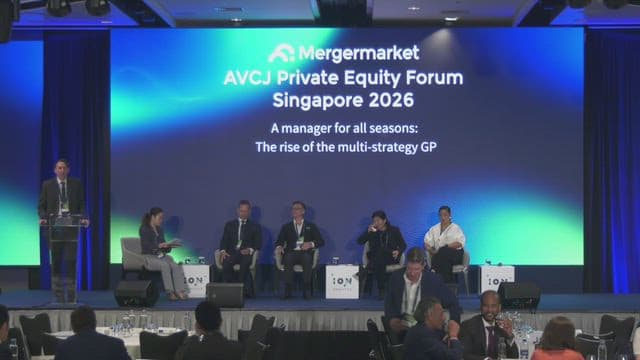
Adding new strategies is no longer the preserve of large-cap global managers. Several mid-market private equity firms in Asia have branched into areas such as private credit, venture capital, core-plus infrastructure, and public equities. A few VC firms are making similar moves. It is an opportunity to deepen relationships with existing LPs, allowing them to double-down on certain geography with a proven counterparty. However, managers must demonstrate strategic rationale and bandwidth to win over investors.
- How do GPs preserve their core culture when adding strategies?
- What are the next frontiers for expansion?
- What kind of strategic expansion makes most sense in Southeast Asia and more broadly across Asia?
- How do LPs get comfortable with managers pursing these ambitions?





 play_arrow
Southeast Asia offers growth, diversification, and compelling narratives around emerging consumers and regional supply chain reorientation. Yet the GP community remains small, individual players lack scale, and returns are inconsistent. At a challenging time for private equity globally, Southeast Asia might require a re-think. Managers must consider the strategies and deal sizes that work best in different geographies, what can be done to build towards exits, and how regional approaches tie into the wider world.
- Returns aside, what are the best ways to sell a Southeast Asia strategy?
- Are regulatory and political headwinds causing GPs to refocus?
- How can investors double down on the region’s bright spots
- What are the prospects for exits, and what happens if 2026 is a slow year?





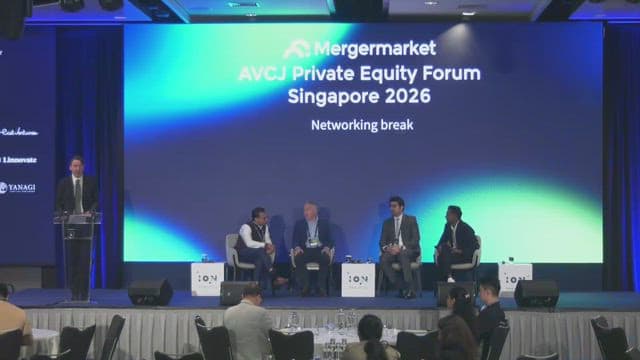
Networking break
 play_arrow
There are many reasons to be positive about Indian private equity: investment is growing in scope, with more buyout opportunities emerging; the country has led Asia in exits over the last few years, underpinned by robust stock markets; and existing economic and demographic tailwinds are being helped, not hindered, by policymakers. However with surge in oil prices, inflationary pressures and INR coming under pressure in recent months, are there speed bumps ahead?
- How are Indian managers institutionalising their operations?
- Are large-cap control deals the most compelling opportunity?
- What questions are LPs asking when assessing India-focused funds?





 play_arrow
Private equity is increasingly turning to private wealth, launching dedicated evergreen vehicles or taking aggregated commitments to traditional funds via banks and wealth management platforms. Uncertainties still exist around the compatibility of an illiquid long-term asset class and investors used to operating on a shorter-term basis. In this context, education is key. GPs must put resources on the ground – often working in collaboration with local distribution partners – to manage expectations and provide timely performance updates.
- How does Asia private wealth stack up in terms of scale and sophistication?
- To what extent have evergreen vehicles delivered on performance?
- Is there a risk that product proliferation results in products that cannot scale?
- What must GPs do to keep institutional investors happy?





End of conference and networking reception
 play_arrow

 play_arrow
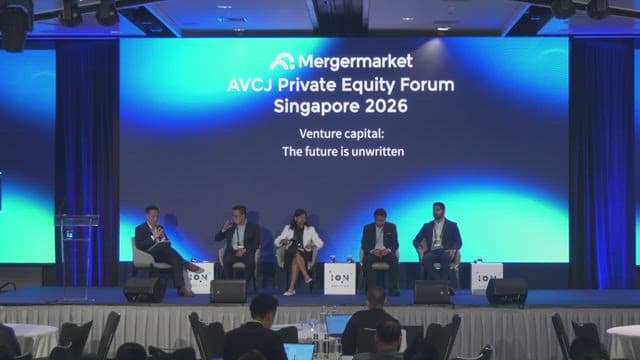
Southeast Asia’s venture capital community faces significant headwinds. With limited exit options, LP confidence has weakened and fundraising activity has slowed. These dynamics have compelled managers to reassess investment strategies and approaches to portfolio management – and lobby local regulators to facilitate technology sector IPOs. Digitalisation and artificial intelligence (AI) look set to define the next phase of VC. Southeast Asia’s fundamentals are a good fit, but managers in the region still have much to prove.
- What is the key to delivering more IPOs from VC portfolios?
- Where else does the start-up ecosystem require structural change?
- How is the AI investment opportunity evolving in Southeast Asia?
- What does an effective global-from-day-one strategy look like?





 play_arrow
LPs are drawn to the flexibility and liquidity private credit brings to alternative investment programmes, and this demand for exposure has helped drive extraordinary growth in the asset class. Private credit funds globally are supporting leveraged buyouts and providing structured financing to blue-chip corporates, and everything in between. Increasingly, this extends to hybrid solutions across the debt-to-equity spectrum. Opportunity abounds, but a higher profile – and hints of a deterioration in credit quality – invites additional scrutiny of approaches to deal sourcing, pricing, and risk management.
- Which geographies or strategies offer the most attractive risk-return?
- In what ways do macro factors shape opportunities in different Asian markets?
- How are GPs managing liquidity, transparency, and governance, particularly as strategies evolve beyond traditional direct lending?
- What are the prospects for special situations and asset-based finance and hybrid opportunities in Asia?
- How is private credit evolving beyond traditional lending, and what role does hybrid solutions play in addressing more complex financing needs?





Networking break
 play_arrow
Greater China and Indian exchanges accounted for 90% of capital raised by PE and VC-backed Asian companies via IPO in 2025. The rest of the region needs to catch up if growth companies – and their investors – are to have scalable exit options. Stakeholders are working to create the right ecosystems, whether that means tweaking regulations, introducing tax incentives, or developing secondary market liquidity. Then they need companies to be confident enough to make the jump.
- Which approaches have stock exchanges found most effective when engaging PE?
- What are the advantages of Asian stock exchanges?
- Beyond liquidity, what characteristics make an exchange attractive?
- What are the IPO prospects for companies that are not tech-related?




 play_arrow
Many LPs are currently wary allocators, conscious not only of yet-to-materialise distributions but also of how macro volatility impacts portfolio management. This feeds into shifts in perception of liquidity and asset allocation goals. Where there is an ongoing commitment to private equity, re-ups are not easily won. Consolidation of manager relationships to focus on proven partners is one theme, but identifying whether a team is equipped to prevail in conditions different to past cycles is another.
- What are the overlooked geographies or strategies in Asia?
- Can deeper relationships with multi-asset GPs lead to improved returns?
- How important are secondaries and co-investment in accessing Asia?
- Can institutional and retail capital exist in the same structures without friction?



Close of conference and networking lunch
Confirm cancellation
An error occurred trying to play the stream. Please reload the page and try again.
CloseSign-up to join the ION Analytics Community to:
- Register for events
- Access market insights
- Download reports